
Tesla Cybertruck AWD
Real-world range calculator with WLTP data
Specifications
Calculate Real-World Range
Real-world range calculator with WLTP data
Estimated range
Results are estimates based on WLTP data and standard correction factors. Real-world range may vary based on many factors.
How the Tesla Cybertruck AWD Range Calculator Works
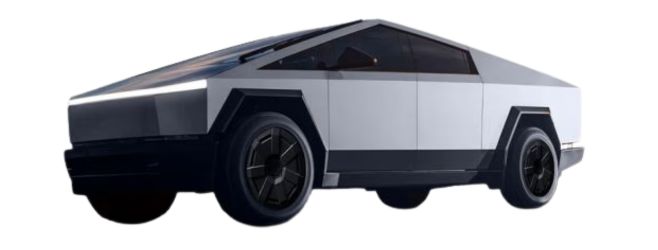
The Tesla Cybertruck AWD is rated at 547 km WLTP from a large 123 kWh battery and a rated efficiency of 22.5 kWh/100 km. Our calculator starts from those real numbers and then adjusts for the variables WLTP leaves out: speed, temperature, terrain, payload, towing and climate use. The Cybertruck is a full-size electric pickup, and its numbers have to be read in that light: at roughly 3,000 kg with a tall, slab-sided stainless-steel body, it is far less aerodynamic than a sedan, so its 22.5 kWh/100 km rated consumption is high by EV standards but entirely reasonable for a vehicle this large and heavy. The dual-motor all-wheel-drive setup produces 448 kW (600 hp) and accelerates to 100 km/h in 4.1 seconds - genuinely quick for a truck - while the big battery is what delivers the 547 km headline despite the drag. On the road the speed sensitivity is pronounced because of the frontal area: at a steady 130 km/h expect roughly 27-30 kWh/100 km, good for around 410-450 km, while easing to 100-110 km/h pushes that toward 480-520 km. The honest framing for a pickup is that range falls hard with payload and especially towing, and that the Cybertruck's real-world strength is Tesla's Supercharger network, which makes 250 kW fast charging easy to access on long hauls.
Tesla Cybertruck Winter Range and Cold-Weather Driving
The Cybertruck loses range in the cold for the usual two reasons: the battery delivers less energy below about 10°C, and heating a large cabin draws real power. From its 547 km WLTP baseline, plan for roughly 380-420 km around -5°C to -7°C, dropping toward 320-370 km in harder cold near -15°C. The dual-motor all-wheel drive gives the Cybertruck confident traction in snow, and a standard heat pump reduces the energy needed for cabin heating versus a resistive-only system. Tesla's battery preconditioning runs automatically when you navigate to a Supercharger, warming the pack so it accepts higher charging speeds even in the cold. Two truck-specific points matter most: the stainless-steel body does not corrode from road salt, and towing in winter combines the cold penalty with the towing penalty, so expect a much larger drop when hauling a trailer in low temperatures.
Plan for roughly 380-420 km around -5°C to -7°C and 320-370 km near -15°C, against the 547 km WLTP rating. City driving holds up better than the motorway because lower speeds cut aerodynamic losses and offer more regen. Towing in winter is the big one: combining the cold penalty with the aerodynamic and weight cost of a trailer can cut range by a third to a half, so plan charging stops conservatively when hauling in cold weather.
Winter Tips:
- ❄️ Precondition the cabin and battery from the Tesla app while plugged in, so the energy comes from the grid rather than your range
- ❄️ Navigate to a Supercharger to trigger automatic battery preconditioning, which warms the pack for faster cold-weather charging
- ❄️ Lean on the heated seats and heated steering wheel first - direct warmth costs a fraction of what heating a large cabin does
- ❄️ Use Chill mode in slippery conditions for smoother power delivery and more predictable traction
- ❄️ Plan a much larger range margin when towing in winter - the cold penalty and towing penalty stack
- ❄️ The stainless-steel body handles road salt without corrosion, so winter use is low-worry on that front
Winter Features:
- Standard heat pump reduces the energy needed to heat the cabin versus a resistive-only heater
- Dual-motor all-wheel drive provides strong, confident traction in snow and on ice with appropriate tyres
- Automatic battery preconditioning warms the pack when navigating to a Supercharger for faster cold charging
- Battery thermal management keeps the large pack in a usable temperature window in extreme cold
- Stainless-steel exoskeleton resists road-salt corrosion, a practical advantage for winter ownership
Tesla Cybertruck Real-World Range vs WLTP
The 547 km WLTP figure comes from a lab cycle; on the road, expect roughly 80-90% in mild weather without a load, which works out to around 440-490 km of mixed driving. Gentle, lower-speed driving can edge higher thanks to regen, while sustained motorway cruising is where a tall, heavy truck falls hardest. A confident everyday, unladen expectation in spring and autumn is around 440-480 km - strong for a full-size electric pickup, with the caveat that payload and towing change the picture significantly.
Working from the Cybertruck's rated 22.5 kWh/100 km and 123 kWh battery: at a relaxed 100-110 km/h it sits near rated consumption and can approach 500 km unladen; at 130 km/h consumption rises to roughly 27-30 kWh/100 km, which translates to about 410-450 km. Towing pushes consumption far higher - a large trailer can roughly halve range - so plan around 250-350 km when hauling. These are engineering estimates derived from the published efficiency and battery size rather than a single test, so treat them as planning guidance, and remember that a loaded or towing truck behaves very differently from an empty one.
The Cybertruck's range is a balance of a very large 123 kWh battery against the realities of a full-size truck: a tall, flat-sided stainless body with a large frontal area is far less aerodynamic than a car, and roughly 3,000 kg of mass demands energy to accelerate and to climb. The big battery is what keeps the headline figure competitive despite that drag. As always, speed dominates - drag rises with the square of velocity - and on a truck the frontal area makes that penalty especially steep. Payload and towing are the other major variables, and Tesla's Supercharger network is the practical factor that makes long trips manageable.
Getting the Most Range From Your Tesla Cybertruck
- Cruise at 100-110 km/h on the motorway rather than 130 - the tall body makes the speed penalty especially steep on this truck
- Close the powered tonneau cover over the bed when running empty to cut aerodynamic drag
- Use regen on its standard setting so braking energy is recovered into the battery instead of lost as heat
- Precondition the cabin while charging at home so you set off warm without spending battery on heat-up
- Plan trips with the in-car navigation, which preconditions the battery and routes via Superchargers automatically
- Carry only the payload you need and remove roof or bed accessories that add drag when not in use
Tesla Cybertruck Charging Strategy
- On a 250 kW Supercharger, a 10-80% top-up takes roughly 40 minutes thanks to the large 123 kWh pack
- Home AC charging with a Tesla Wall Connector fills the battery overnight - ideal for daily use
- Charge to 80% for daily use and reserve 100% charges for days you genuinely need the full range headroom
- Navigate to a Supercharger so the battery preconditions automatically for faster, more consistent charging
- On towing trips, plan shorter, more frequent stops - range drops sharply with a trailer, so charge before you need to
- Lean on the Supercharger network for long hauls; broad access is the Cybertruck's biggest real-world charging advantage
Related Models
Ford F-150 Lightning Extended Range
The conventional-truck rival with a 131 kWh battery - a familiar pickup shape and tailgate practicality versus the Cybertruck's radical exoskeleton design
Rivian R1T Tri-Motor
An adventure-focused electric pickup with a large 135 kWh pack - a more traditional truck silhouette and strong off-road focus
Tesla Model X Long Range
Tesla's large SUV on the same Supercharger network - the practical choice if you want big-battery range and space without a pickup bed