
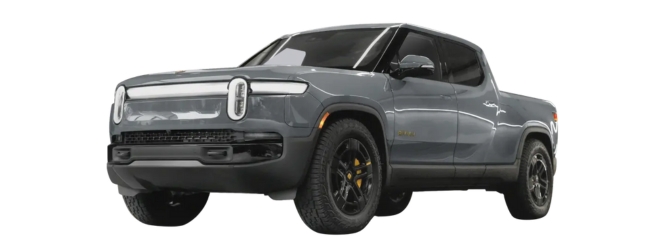
Rivian R1T Tri-Motor
Real-world range calculator with WLTP data
Specifications
Calculate Real-World Range
Real-world range calculator with WLTP data
Estimated range
Results are estimates based on WLTP data and standard correction factors. Real-world range may vary based on many factors.
How the Rivian R1T Range Calculator Works
The Rivian R1T Tri-Motor is rated at 528 km WLTP, built on a large 135 kWh battery and a rated efficiency of 25.6 kWh/100 km. Our calculator takes those real numbers as the starting point and then adjusts for speed, temperature, terrain and climate use - the variables WLTP leaves out. The R1T is a full-size electric adventure pickup, and physics works against efficiency here: it is tall, heavy and boxy, with a big frontal area and chunky tyres. The tri-motor drivetrain produces around 630 kW (850 hp) for a 0-100 km/h time near 3.0 seconds, but the figure that matters for range is the 25.6 kWh/100 km rated consumption - high, but normal for a capable pickup. The very large 135 kWh pack offsets that thirst to give a usable everyday range. At a steady 130 km/h the R1T draws roughly 30-34 kWh/100 km, good for around 380-430 km unladen, while easing to 110 km/h pushes that toward 440-490 km because aerodynamic drag falls sharply with speed. Crucially, towing or carrying a heavy payload changes everything - see the real-world section for honest caveats. Treat the figures here as transparent estimates derived from the truck's published efficiency and battery size, not from any single road test.
Rivian R1T Winter Range and Cold-Weather Driving
The R1T loses range in the cold for the usual two reasons: the battery delivers less energy below about 10°C, and heating the large cab draws real power. From its 528 km WLTP baseline, expect roughly 350-400 km around -5°C to -7°C unladen, dropping toward 300-350 km in harder cold near -15°C. The very large 135 kWh pack means even a cold day leaves a comfortable buffer. The R1T's heat pump helps limit the heating penalty, and its all-wheel drive plus high clearance make it genuinely capable in snow. Bear in mind that towing or a heavy payload in winter stacks two penalties at once - plan charging stops conservatively when loaded in the cold.
Plan for roughly 350-400 km around -5°C to -7°C and 300-350 km near -15°C unladen, against the 528 km WLTP rating. City driving holds up better than the highway because lower speeds cut aerodynamic losses and offer more regen. The heat pump softens the heating penalty, but the R1T's size means cold-weather losses are felt in absolute terms - and towing or heavy payload in winter can cut range much further, so build in margin.
Winter Tips:
- ❄️ Precondition the cab and battery from the Rivian app while plugged in, so the energy comes from the grid rather than your range
- ❄️ Lean on the heated seats and heated wheel first - direct warmth costs a fraction of what heating the large cabin air does
- ❄️ Keep highway speed moderate in winter; the cold penalty stacks on the speed penalty, and a tall pickup pays dearly for speed
- ❄️ Allow extra charging time when the pack is cold - DC speed climbs once the battery warms into its ideal window
- ❄️ Fit proper winter or all-terrain winter tyres - grip on snow and ice matters far more than the small range cost
- ❄️ When towing or carrying a heavy load in winter, plan conservative charging stops - two penalties combine to cut range hard
Winter Features:
- A heat pump reduces the energy needed to heat the large cabin versus a resistive-only heater
- All-wheel drive with independent motor control provides strong traction on snow and loose surfaces
- Adjustable air suspension raises ground clearance for deep snow, then lowers again to cut highway drag
- Liquid battery thermal management keeps the large pack within a usable temperature window in cold conditions
- App-based preconditioning warms the cab on a timer so you leave with a comfortable interior on cold mornings
Rivian R1T Real-World Range vs WLTP
The 528 km WLTP figure comes from a lab cycle; on the road, expect roughly 80-90% in mild weather unladen, which works out to around 420-475 km of mixed driving. Gentle, lower-speed use can edge higher thanks to regen, while sustained highway cruising is where a tall, heavy pickup falls hardest. A confident everyday expectation in spring and autumn, driving the truck empty, is around 430-470 km - strong for a full-size electric pickup, but very dependent on load.
Working from the R1T's rated 25.6 kWh/100 km and 135 kWh battery: at a relaxed 100-110 km/h it sits near rated consumption and can approach 500 km unladen; at 130 km/h consumption rises to roughly 30-34 kWh/100 km, which translates to about 380-430 km. Towing and heavy payload are the big caveats: pulling a substantial trailer can easily halve range, because energy use roughly scales with the extra mass and the much larger combined frontal area you are pushing through the air. These are engineering estimates derived from the published efficiency and battery size rather than a single test, so treat them as planning guidance and assume far less range when loaded.
The R1T's consumption reflects what it is built to do: a tall, heavy body with a large frontal area and grippy off-road tyres all add drag and rolling resistance, while all-wheel drive and substantial weight mean it works hard to accelerate and cruise. The very large 135 kWh battery is what turns that thirst into a usable range. Towing and payload are the dominant real-world variables - a heavy trailer can cut range by a large margin. As always, speed dominates too; drag rises with the square of velocity, so the 110-versus-130 km/h difference is large on a vehicle this shape.
Getting the Most Range From Your Rivian R1T
- Cruise at 110-120 km/h on the highway rather than 130 - on a tall, heavy pickup, speed is the single biggest range factor
- Lower the air suspension to its road setting at highway speeds to reduce the truck's considerable aerodynamic drag
- Use a Conserve or efficiency drive mode for long trips to soften throttle response and trim energy use
- Precondition the cab while charging at home so you set off warm without spending battery on heat-up
- Keep tyres at the recommended pressure and avoid unnecessary roof or bed loads - both add real drag on a big vehicle
- Plan trips around your actual load - expect significantly less range when towing or carrying heavy payload
Rivian R1T Charging Strategy
- On a DC fast charger the R1T peaks around 220 kW, but the very large pack still means a 10-80% top-up takes a while - plan stops accordingly
- AC charging from a home wallbox fills the big pack overnight - ideal for starting each day full given its capacity
- Charge to 80% for daily use and reserve 100% charges for days you genuinely need the full 528 km headroom
- Use route planning so the truck preconditions the battery before a DC stop, giving faster, more consistent charging
- When towing, plan shorter legs and more frequent stops - real range drops sharply under load
- In winter, let the battery warm before fast charging - cold cells charge slower, so build that into trip timing
Related Models
Ford F-150 Lightning Extended Range
The mainstream electric pickup rival with a similarly large battery and the familiarity of the F-150, but less off-road focus
Tesla Cybertruck AWD
A radical electric pickup alternative with a large battery and strong performance, but a very different design and ownership feel
Kia EV9 GT-Line AWD
A large electric three-row family hauler for buyers who want the space and range without a pickup's payload and towing focus