
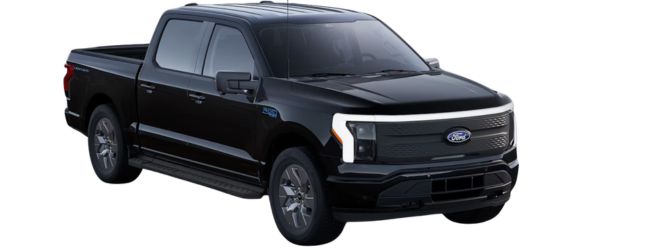
Ford F-150 Lightning Extended Range
Real-world range calculator with WLTP data
Specifications
Calculate Real-World Range
Real-world range calculator with WLTP data
Estimated range
Results are estimates based on WLTP data and standard correction factors. Real-world range may vary based on many factors.
How the Ford F-150 Lightning Range Calculator Works
The Ford F-150 Lightning Extended Range is rated at 515 km WLTP, built on a massive 131 kWh battery and a rated efficiency of 25.4 kWh/100 km. Our calculator takes those real numbers as the starting point and then adjusts for speed, temperature, terrain, payload and towing - the variables the WLTP lab cycle leaves out. The Lightning turns America's best-selling pickup into a genuine electric workhorse: dual motors produce 433 kW (around 580 hp) for a 0-100 km/h time of about 4.0 seconds, while the truck still tows and hauls like an F-150 should. That capability has a cost - a tall, boxy, two-and-a-half-tonne pickup will never be efficient, and the 25.4 kWh/100 km rating is the highest in our line-up by a wide margin. The huge battery is what makes it work: even at truck-like consumption there is enough capacity for real range. As always, speed and load dominate. At a steady 130 km/h the Lightning draws roughly 30-34 kWh/100 km, good for around 380-430 km, while easing to 110 km/h pushes that back toward 470 km because aerodynamic drag falls sharply with speed. Towing or carrying a heavy payload reduces range substantially.
Ford F-150 Lightning Winter Range and Cold-Weather Driving
The Lightning loses range in the cold for the usual two reasons: the battery delivers less energy below about 10°C, and heating the large cabin draws real power - though on a truck this size those losses sit on top of an already-high baseline consumption. From its 515 km WLTP rating, expect roughly 350-400 km around -5°C to -7°C, dropping toward 300-350 km in harder cold near -15°C. The standard dual-motor all-wheel drive gives excellent traction, and the truck's weight helps it stay planted on snow and ice. The big advantage in winter is the sheer size of the 131 kWh battery: even with a meaningful cold penalty, the absolute range left over is usable, and for work patterns built around overnight home charging the cold is rarely a blocker.
Plan for roughly 350-400 km around -5°C to -7°C and 300-350 km near -15°C, against the 515 km WLTP rating. City and lower-speed driving holds up better than the motorway because aerodynamic losses are smaller. Towing in winter is the big one - between the cold and the load, range can fall by 40-50% or more, so plan charging stops carefully. The massive battery means even reduced efficiency still leaves practical capability for everyday work.
Winter Tips:
- ❄️ Precondition the cabin and battery from the FordPass app while plugged in - the large cabin benefits significantly and the energy comes from the grid
- ❄️ Lean on the heated seats and heated steering wheel first - direct warmth costs a fraction of what heating the big cabin air does
- ❄️ Keep motorway speed moderate in winter; the cold penalty stacks on the speed penalty, so 110 km/h saves a lot over 130
- ❄️ Towing in the cold compounds losses heavily - plan for a large range reduction and frequent charging when hauling in winter
- ❄️ Fit winter or all-season tyres - on a heavy AWD truck, grip and braking matter far more than the small range cost
- ❄️ Battery preconditioning activates automatically when you navigate to a DC charger, restoring charge speed in the cold
Winter Features:
- Standard dual-motor all-wheel drive provides excellent traction on snow and ice
- Liquid battery thermal management heats and cools the big pack to keep it in a usable window
- Heated front seats (and heated rear seats on higher trims) let you cut cabin air heating while staying warm
- Pro Power Onboard can run auxiliary heaters or equipment when working in cold conditions
- App-based and navigation-triggered preconditioning warm the cabin and battery before you set off or fast charge
Ford F-150 Lightning Real-World Range vs WLTP
The 515 km WLTP figure comes from a lab cycle; on the road, expect roughly 75-85% in mild weather, which works out to around 390-440 km of mixed driving. Gentle, lower-speed use can edge higher thanks to regeneration, while sustained motorway cruising and any load are where the number falls. A confident everyday expectation, unladen in mild weather, is around 380-430 km. Towing a trailer or carrying a heavy payload can cut that to 200-300 km depending on weight and speed.
Working from the Lightning's rated 25.4 kWh/100 km and 131 kWh battery: at a relaxed 100-110 km/h, unladen, it sits near rated consumption and can approach 470 km; at 130 km/h consumption rises to roughly 30-34 kWh/100 km, which translates to about 380-430 km. These are engineering estimates derived from the published efficiency and battery size rather than a single test, so treat them as planning guidance. Aerodynamics dominate on a truck this shape - a tonneau cover, an empty bed and lower speeds all help, while a trailer or a roof load hurts a lot.
The Lightning's range reflects its nature as a full-size pickup: a large frontal area, a high kerb weight, and an all-wheel-drive system all push consumption up, which is why efficiency is high. The 131 kWh battery compensates with raw capacity. Speed and load are the biggest levers you control - drag rises with the square of velocity, and every extra 100 kg of payload or trailer weight costs range. For construction, farm or trade use where the truck charges overnight at base, range is rarely the limitation; long towing trips are where planning matters most.
Getting the Most Range From Your F-150 Lightning
- Keep highway speed at 100-110 km/h - on a boxy truck, efficiency drops rapidly above this
- Fit a tonneau cover and keep the bed empty when not hauling to cut aerodynamic and weight penalties
- Precondition the cabin while charging so you set off warm without spending battery on heat-up
- Plan towing trips around chargers and expect a large range reduction - speed matters even more with a trailer
- Use regenerative braking, especially in hilly terrain, to recover energy instead of losing it as heat
- Keep tyres at the recommended pressure; under-inflation quietly eats range on every journey
Ford F-150 Lightning Charging Strategy
- On a capable DC charger, 150 kW adds roughly 10-80% in around 40 minutes
- A high-power home charger refills the big pack overnight - ideal for work patterns built around base charging
- Charge to around 90% for work days and reserve 100% charges for the days you genuinely need maximum range
- Use navigation to a DC charger so the battery preconditions automatically for faster, more consistent charging
- A 30-minute DC stop adds a useful chunk of range - plan it around a lunch or job-site break
- The Ford Charge Station Pro enables home backup power, turning the big battery into emergency household supply
Related Models
Rivian R1T Tri-Motor
An adventure-focused electric pickup rival - the R1T is more lifestyle-oriented while the Lightning leans on familiar work-truck practicality
Tesla Cybertruck AWD
Tesla's stainless-steel electric pickup - a more radical design competing for the same buyers who need real towing and payload
Chevrolet Equinox EV 3LT
A far more efficient electric crossover for anyone who doesn't actually need a pickup's towing and payload