
Tesla Model X Long Range
Real-world range calculator with WLTP data
Specifications
Calculate Real-World Range
Real-world range calculator with WLTP data
Estimated range
Results are estimates based on WLTP data and standard correction factors. Real-world range may vary based on many factors.
How the Tesla Model X Range Calculator Works
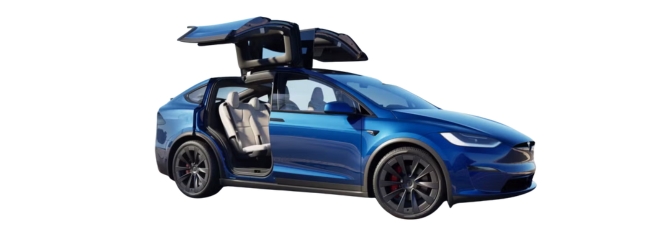
The Tesla Model X Long Range is rated at 576 km WLTP, built on a 100 kWh battery and a rated efficiency of 17.4 kWh/100 km. Our calculator takes those real numbers as the starting point and then adjusts for speed, temperature, terrain and climate use - the variables WLTP leaves out. The Model X is Tesla's large, three-row electric SUV, instantly recognisable for its rear falcon-wing doors and capable of seating up to seven. It is also seriously quick: dual motors produce a combined 493 kW for a 3.9-second 0-100 km/h time and a 250 km/h top speed. The trade-off for that space and capability is a taller, heavier body than a sedan, which is why its rated efficiency sits a little above the Model S. At a steady 130 km/h it draws roughly 21-24 kWh/100 km, good for around 400-470 km, while easing to 110 km/h pushes that back toward 500 km because aerodynamic drag falls sharply with speed. Like the rest of the range, the Model X has direct access to the Tesla Supercharger network, and it can tow, though towing meaningfully reduces range.
Tesla Model X Winter Range and Cold-Weather Driving
The Model X loses range in the cold for the usual two reasons: the battery delivers less energy below about 10°C, and heating a large cabin draws real power. From its 576 km WLTP baseline, expect roughly 380-430 km around -5°C to -7°C, dropping toward 320-370 km in harder cold near -15°C. The big 100 kWh pack means even a cold day leaves plenty of usable range for a family SUV. The Model X benefits from a heat pump, which keeps the cost of warming its large interior lower than a resistive-only system, and Tesla's preconditioning warms cabin and battery efficiently when the car is plugged in or routed to a Supercharger. Its standard all-wheel drive is a genuine asset on cold, slippery roads.
Plan for roughly 380-430 km around -5°C to -7°C and 320-370 km near -15°C, against the 576 km WLTP rating. City driving holds up better than the motorway because lower speeds cut aerodynamic losses and offer more regen. The larger cabin means heating draws a touch more than in a sedan, but the heat pump and the sheer size of the 100 kWh battery keep absolute winter range solid for a big SUV.
Winter Tips:
- ❄️ Precondition the cabin and battery from the Tesla app while plugged in, so the energy comes from the grid rather than your range
- ❄️ Lean on the heated seats and heated wheel first - direct warmth costs a fraction of what heating a large cabin does
- ❄️ Keep motorway speed moderate in winter; the cold penalty stacks on the speed penalty, so 110 km/h saves a lot over 130
- ❄️ Allow extra charging time when the pack is cold - DC speed climbs once the battery warms into its ideal window
- ❄️ Fit proper winter or all-season tyres in snowy regions - even with all-wheel drive, the right rubber transforms cold-weather grip
- ❄️ Let the navigation preheat the battery on the way to a Supercharger so the car arrives ready to charge at full speed
Winter Features:
- A standard heat pump reduces the energy needed to heat the large cabin versus a resistive-only heater
- Liquid battery thermal management keeps the large pack in a usable temperature window
- Heated seats across multiple rows plus a heated steering wheel let you cut cabin air heating while staying comfortable
- Standard dual-motor all-wheel drive provides confident traction on cold, wet and snowy surfaces
- Navigation-linked battery preconditioning warms the pack before a Supercharger stop for faster cold-weather charging
Tesla Model X Real-World Range vs WLTP
The 576 km WLTP figure comes from a lab cycle; on the road, expect roughly 80-90% in mild weather, which works out to around 460-520 km of mixed driving. Gentle town use can edge higher thanks to regen, while sustained motorway cruising is where the number falls. A confident everyday expectation in spring and autumn is around 470-510 km - strong range for a vehicle this size and shape.
Working from the Model X's rated 17.4 kWh/100 km and 100 kWh battery: at a relaxed 100-110 km/h it sits near rated consumption and can approach 500 km; at 130 km/h consumption rises to roughly 21-24 kWh/100 km, which translates to about 400-470 km. These are engineering estimates derived from the published efficiency and battery size rather than a single test, so treat them as planning guidance. A full load of passengers and luggage, large wheels, or towing a trailer will move the number toward the lower end - towing in particular can cut range substantially.
The Model X's range comes from a few things: a very large 100 kWh pack, an efficient dual-motor drivetrain, and clever aerodynamic detailing that helps a tall body cheat the wind. Against it works the car's height, frontal area and weight - it is a big SUV, and pushing that mass and shape through the air costs energy. As always, speed dominates: drag rises with the square of velocity, so the 110-versus-130 km/h difference is large, and adding a trailer or roof load amplifies the effect.
Getting the Most Range From Your Tesla Model X
- Cruise at 110-120 km/h on the motorway rather than 130 - it is the single biggest factor in real range
- Use regenerative braking smoothly so deceleration energy is recovered into the battery instead of lost as heat
- Remove roof boxes and bike racks when not needed - they add significant drag on a tall vehicle
- Choose the smaller wheel option where possible - large wheels add drag and rolling resistance
- Plan towing trips with extra charging stops, as a trailer can cut range substantially
- Keep tyres at the recommended pressure; under-inflation quietly eats range on every journey
Tesla Model X Charging Strategy
- On a 250 kW Supercharger, a 10-80% top-up takes around 30 minutes when the battery is preconditioned
- 11 kW AC charging fills roughly 10-90% overnight in about 9-10 hours - ideal for a home wallbox
- Charge to 80% for daily use and reserve 100% charges for days you genuinely need the full 576 km headroom
- Let the navigation precondition the battery before a Supercharger stop for faster, more consistent charging
- When towing, plan more frequent stops - both because range drops and because some sites need space for a trailer
- In winter, let the battery warm before fast charging - cold cells charge slower, so plan stops accordingly
Related Models
Kia EV9 GT-Line AWD
A large three-row electric SUV alternative - the EV9 offers similar seven-seat family space and very fast charging at a lower price point than the Model X
BMW iX xDrive50
A big, premium electric SUV with a very large battery and long range, a comfort-focused rival to the Model X's performance-led character
Tesla Model Y Long Range
Tesla's smaller, more efficient SUV - the Model Y delivers much of the practicality for less money and longer real-world range per kWh