
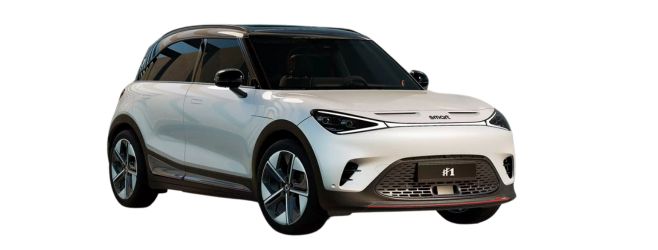
Smart #1 Pro+
Real-world range calculator with WLTP data
Specifications
Calculate Real-World Range
Real-world range calculator with WLTP data
Estimated range
Results are estimates based on WLTP data and standard correction factors. Real-world range may vary based on many factors.
How the Smart #1 Pro+ Range Calculator Works
The Smart #1 Pro+ is rated at 440 km WLTP, built on a 66 kWh usable battery and a rated efficiency of 15.0 kWh/100 km. Our calculator takes those real numbers as the starting point and then adjusts for speed, temperature, terrain and climate use - the variables WLTP leaves out. The reborn Smart is no longer a tiny two-seater: the #1 is a premium compact crossover, the product of the Mercedes-Benz and Geely joint venture, with Mercedes-led design and a Geely SEA platform underneath. A single rear-mounted motor delivers 200 kW (272 hp), making the Pro+ surprisingly brisk with a 0-100 km/h time of 6.7 seconds and a 180 km/h top speed. Rear-wheel drive keeps the drivetrain simple and avoids the parasitic losses of an all-wheel-drive system, which helps efficiency, but the #1's tall, upright crossover body and chunky kerb weight push consumption higher than a low hatchback. The 66 kWh pack and that 15.0 kWh/100 km rating make it a comfortable everyday and weekend car rather than a pure long-hauler. At a steady 130 km/h the #1 draws closer to 20-22 kWh/100 km, worth roughly 300-330 km, while easing to 110 km/h pushes that back toward 360-390 km because aerodynamic drag drops sharply with speed.
Smart #1 Pro+ Winter Range and Cold-Weather Driving
The #1 loses range in the cold for the usual two reasons: the battery delivers less energy below about 10°C, and heating the cabin draws real power. From its 440 km WLTP baseline, expect roughly 290-330 km around -5°C to -7°C, dropping toward 250-290 km in harder cold near -15°C. The 66 kWh pack means even a cold day still leaves a healthy buffer for commuting and errands. The rear-drive layout asks for a little respect on slippery roads - the powered rear axle can feel lively if you are heavy with the throttle - so proper winter tyres make a real difference to both grip and confidence when the temperature drops.
Plan for roughly 290-330 km around -5°C to -7°C and 250-290 km near -15°C, against the 440 km WLTP rating. City driving holds up better than the motorway because lower speeds cut aerodynamic losses and give more regen opportunities. The tall crossover shape means the #1 is a little thirstier at speed than a low hatchback, but the 66 kWh battery keeps absolute winter range comfortable for daily use.
Winter Tips:
- ❄️ Precondition the cabin and battery from the Smart app while plugged in, so the warm-up energy comes from the grid rather than your range
- ❄️ Lean on the heated seats and heated wheel first - direct warmth costs a fraction of what heating cabin air does
- ❄️ Keep motorway speed moderate in winter; the cold penalty stacks on the speed penalty, so 110 km/h saves a lot over 130
- ❄️ Allow extra charging time when the pack is cold - DC speed climbs once the battery warms into its ideal window
- ❄️ Fit winter or all-season tyres - on a rear-drive crossover, grip matters more than the small range cost
- ❄️ Use a higher regen setting in stop-start winter traffic to recover energy back into the battery
Winter Features:
- Heat pump reduces the energy needed to warm the cabin versus a resistive-only heater
- Liquid battery thermal management keeps the 66 kWh pack in a usable temperature window in the cold
- Heated front seats and heated steering wheel let you cut cabin air heating while staying comfortable
- Selectable regenerative braking levels help recover energy on cold, low-grip descents
- App-based preconditioning warms the car on a timer so you leave with a defrosted, comfortable cabin
Smart #1 Pro+ Real-World Range vs WLTP
The 440 km WLTP figure comes from a lab cycle; on the road, expect roughly 80-90% in mild weather, which works out to around 350-395 km of mixed driving. Gentle town use can edge toward the upper end thanks to regen and lower speeds, while sustained motorway cruising is where the figure falls hardest because of the crossover's upright body. A confident everyday expectation in spring and autumn is around 360-390 km - plenty for commuting and weekend trips.
Working from the #1's rated 15.0 kWh/100 km and 66 kWh usable battery: at a relaxed 100-110 km/h it sits near rated consumption and can approach 400 km; at 130 km/h consumption rises to roughly 20-22 kWh/100 km, which translates to about 300-330 km. These are engineering estimates derived from the published efficiency and battery size rather than a single test, so treat them as planning guidance. The strong 200 kW rear motor is great fun, but leaning on it frequently will visibly raise consumption.
The #1's range is shaped by a mix of helps and hindrances: rear-wheel drive avoids all-wheel-drive losses and the 66 kWh pack gives a solid base, but the tall, upright crossover body has a larger frontal area than a hatchback, and the car carries real kerb weight. As always, speed dominates - aerodynamic drag rises with the square of velocity, so the difference between 110 and 130 km/h is large and the single biggest factor a driver controls.
Getting the Most Range From Your Smart #1 Pro+
- Cruise at 110-120 km/h on the motorway rather than 130 - it is the single biggest factor in real range
- Use a stronger regen setting so braking energy is recovered into the battery instead of lost as heat
- Choose a more efficient drive mode for long trips to soften throttle response and trim climate draw
- Precondition the cabin while charging at home so you set off warm without spending battery on heat-up
- Resist the urge to use the full 200 kW rear motor often - smooth, gentle acceleration saves real energy
- Keep tyres at the recommended pressure; under-inflation quietly eats range on every journey
Smart #1 Pro+ Charging Strategy
- On a fast DC charger the #1 peaks around 150 kW, with a 10-80% top-up taking roughly 30 minutes in good conditions
- 11 kW AC charging fills roughly 10-90% overnight in about 6-7 hours - ideal for a home wallbox
- Charge to 80% for daily use and reserve 100% charges for days you genuinely need the full 440 km headroom
- Use route planning so the car preconditions the battery before a DC stop, giving faster, more consistent charging
- A 20-30 minute DC stop adds plenty of range for the next leg without waiting for a full charge
- In winter, let the battery warm before fast charging - cold cells charge slower, so plan stops accordingly
Related Models
BMW iX1 xDrive30
A premium compact rival with a similar 64.7 kWh battery and 440 km WLTP, but dual-motor all-wheel drive instead of the #1's rear drive
Volvo EX30 Single Motor
Another Geely-related premium small SUV - the EX30 is smaller and more efficient, while the #1 offers more space and a punchier motor
Volvo XC40 Recharge Single Motor
A premium compact SUV alternative with a larger battery, for buyers cross-shopping the #1 on space and brand appeal