
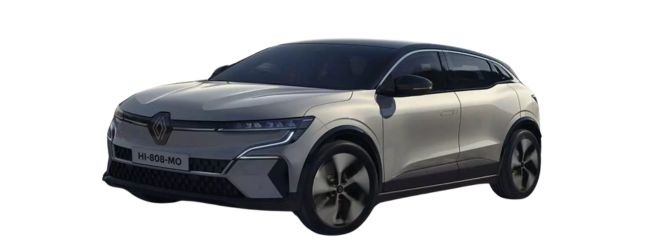
Renault Mégane E-Tech EV60
Real-world range calculator with WLTP data
Specifications
Calculate Real-World Range
Real-world range calculator with WLTP data
Estimated range
Results are estimates based on WLTP data and standard correction factors. Real-world range may vary based on many factors.
How the Renault Megane E-Tech EV60 Range Calculator Works
The Renault Megane E-Tech EV60 is rated at 450 km WLTP from a 60 kWh battery and a notably low rated efficiency of 13.3 kWh/100 km. Our calculator starts from those real numbers and then adjusts for the variables WLTP leaves out: speed, temperature, terrain and climate use. The Megane E-Tech is one of the most efficient compact EVs you can buy, and that is the story here: it does not have the biggest battery in its class, but it makes the most of every kilowatt-hour. Built on the dedicated CMF-EV platform shared with the Nissan Ariya, it pairs a 160 kW (218 hp) front motor with a relatively low kerb weight and a compact hatchback body, hitting 100 km/h in 7.4 seconds. The result is a car that punches above its 60 kWh on the road: at a steady 130 km/h it draws roughly 17-19 kWh/100 km, good for around 320-350 km, while easing back to 110 km/h pushes that toward 390-420 km because aerodynamic drag falls sharply with speed. The OpenR portrait touchscreen with Google built-in handles navigation and route planning natively, and the strong one-pedal driving recovers energy smoothly in town. The honest trade-off is the modest 60 kWh pack and a charge curve that, while peaking around 130 kW, tapers fairly early - so this is a brilliant everyday and regional car rather than a marathon-distance cruiser.
Renault Megane E-Tech Winter Range and Cold-Weather Driving
The Megane E-Tech loses range in the cold for the usual two reasons: the battery delivers less energy below about 10°C, and heating the cabin draws real power. From its 450 km WLTP baseline, plan for roughly 305-335 km around -5°C to -7°C, dropping toward 260-300 km in harder cold near -15°C. The Megane's strong baseline efficiency helps here - because it sips energy in mild conditions, the absolute cold-weather numbers stay usable for daily driving despite the modest 60 kWh pack. A heat pump on the EV60 reduces the energy needed for cabin heating, which softens the winter penalty compared with resistive-only rivals. Front-wheel drive with a nose-heavy balance gives predictable traction, and proper winter or all-season tyres transform grip on cold, wet and snowy roads.
Plan for roughly 305-335 km around -5°C to -7°C and 260-300 km near -15°C, against the 450 km WLTP rating. City driving holds up better than the motorway because lower speeds cut aerodynamic losses and offer more regen. The Megane's class-leading baseline efficiency means it sheds proportionally similar range to rivals, but its strong starting point keeps absolute winter range comfortable for everyday use despite the modest 60 kWh battery.
Winter Tips:
- ❄️ Precondition the cabin and battery from the My Renault app while plugged in, so the energy comes from the grid rather than your range
- ❄️ Lean on the heated seats and heated steering wheel first - direct warmth costs a fraction of what heating the cabin air does
- ❄️ Use Eco mode in winter to soften throttle response and trim climate draw, clawing back useful range in town
- ❄️ Keep motorway speed moderate; the cold penalty stacks on the speed penalty, so 110 km/h saves a lot over 130
- ❄️ Allow extra charging time when the pack is cold - DC speed climbs once the battery warms into its ideal window
- ❄️ Fit winter or all-season tyres - the front-wheel-drive Megane is predictable in snow once it has proper grip
Winter Features:
- A heat pump on the EV60 reduces the energy needed to heat the cabin versus a resistive-only heater
- Liquid battery thermal management keeps the pack in a usable temperature window for consistent behaviour
- Heated front seats and a heated steering wheel let you cut cabin air heating while staying comfortable
- Eco driving mode softens throttle response and limits climate draw to help recover winter range
- Strong one-pedal regen reduces brake use, which also limits brake wear from winter road salt
Renault Megane E-Tech Real-World Range vs WLTP
The 450 km WLTP figure comes from a lab cycle; on the road, expect roughly 80-90% in mild weather, which works out to around 360-405 km of mixed driving. Gentle town use can edge higher thanks to regen and the car's low baseline consumption, while sustained motorway cruising is where the number falls. A confident everyday expectation in spring and autumn is around 370-400 km - excellent for a 60 kWh compact, and a direct result of the platform's efficiency.
Working from the Megane's rated 13.3 kWh/100 km and 60 kWh battery: at a relaxed 100-110 km/h it sits near or even below rated consumption and can approach 400-420 km; at 130 km/h consumption rises to roughly 17-19 kWh/100 km, which translates to about 320-350 km. These are engineering estimates derived from the published efficiency and battery size rather than a single test, so treat them as planning guidance. The takeaway is that the Megane behaves like a larger-battery car at sensible speeds because it is so frugal, but the modest pack means high-speed motorway range is where the 60 kWh limit shows.
The Megane's range comes from a few things working together: an unusually low rated consumption, a low kerb weight for the class, front-wheel drive that avoids the extra losses of an all-wheel-drive system, and a clean compact hatchback shape. Against it works the modest 60 kWh pack, which caps the absolute headline number, and a charge curve that tapers fairly early. As always, speed dominates - drag rises with the square of velocity, so the 110-versus-130 km/h difference is large and especially noticeable on a smaller battery.
Getting the Most Range From Your Renault Megane E-Tech
- Cruise at 110-120 km/h on the motorway rather than 130 - it is the single biggest factor in real range, and it pays off doubly on a 60 kWh car
- Use the strong one-pedal regen so braking energy is recovered into the battery instead of lost as heat
- Choose Eco mode for long trips to soften throttle response and trim climate draw
- Let the OpenR Google route planner handle navigation - it factors in elevation and charging for realistic trip estimates
- Keep tyres at the recommended pressure; under-inflation quietly eats range on every journey
- Precondition the cabin while charging at home so you set off warm without spending battery on heat-up
Renault Megane E-Tech Charging Strategy
- On a DC charger the Megane peaks around 130 kW then tapers fairly early, so a 15-80% top-up lands in the mid-30-minute range
- Home AC charging fills the battery overnight - ideal for daily use and the cheapest way to keep it topped up
- Charge to 80% for daily use and reserve 100% charges for days you genuinely need the full range headroom
- Use the navigation route planner so the car preconditions the battery before a DC stop for faster, more consistent charging
- Because the pack is modest, plan road trips around shorter, more frequent stops rather than one long charge
- In winter, let the battery warm before fast charging - cold cells charge slower, so plan stops accordingly
Related Models
Volkswagen ID.3 Pro
A German compact hatchback rival on the MEB platform - similar everyday role, but the Megane edges it on efficiency and design flair
Nissan Leaf e+
An Alliance relative sharing CMF-EV roots with the Ariya - the Leaf offers a much larger battery, while the Megane is more efficient and modern
Cupra Born 77kWh
A sportier compact rival with a far larger 77 kWh battery and longer range - the Born trades the Megane's efficiency-per-kWh for outright pack size