
Cupra Born 77kWh
Real-world range calculator with WLTP data
Specifications
Calculate Real-World Range
Real-world range calculator with WLTP data
Estimated range
Results are estimates based on WLTP data and standard correction factors. Real-world range may vary based on many factors.
How the Cupra Born 77 kWh Range Calculator Works
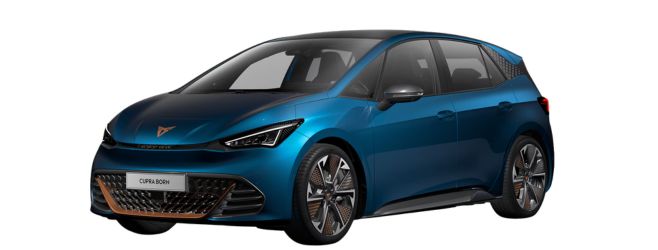
The Cupra Born 77 kWh is rated at 548 km WLTP, built on a usable 77 kWh battery and a rated efficiency of 14.1 kWh/100 km. Our calculator takes those real numbers as the starting point and then adjusts for speed, temperature, terrain and climate use - the variables WLTP leaves out. The Born is Cupra's sporty take on the Volkswagen Group MEB platform: it shares its core electrical architecture with the VW ID.3, but gets a punchier 170 kW motor, firmer suspension and a more aggressive character. That sportier tuning gives a 0-100 km/h time of 7.0 seconds, quick for a hatchback, but it asks a small efficiency price compared with the more comfort-biased ID.3. With the larger 77 kWh pack and a clean hatchback shape, the Born is a genuine long-distance EV: at a steady 130 km/h it draws roughly 18-20 kWh/100 km, good for around 380-420 km, while easing to 110 km/h pushes that back toward 470 km because aerodynamic drag falls sharply with speed.
Cupra Born Winter Range and Cold-Weather Driving
The Born loses range in the cold for the usual two reasons: the battery delivers less energy below about 10°C, and heating the cabin draws real power. From its 548 km WLTP baseline, expect roughly 370-410 km around -5°C to -7°C, dropping toward 320-360 km in harder cold near -15°C. The large 77 kWh pack means even a cold day still leaves plenty of usable range. The sporty setup is worth a thought in winter: if the car is on summer-biased performance tyres, swapping to proper winter or all-season rubber transforms grip on cold, wet and snowy roads, and the firmer suspension makes a smooth driving style worthwhile on icy surfaces.
Plan for roughly 370-410 km around -5°C to -7°C and 320-360 km near -15°C, against the 548 km WLTP rating. City driving holds up better than the motorway because lower speeds cut aerodynamic losses and offer more regen. The sporty tuning costs a touch of cold-weather efficiency versus the ID.3, but the large battery keeps absolute winter range comfortably high for everyday use.
Winter Tips:
- ❄️ Precondition the cabin and battery from the Cupra Connect app while plugged in, so the energy comes from the grid rather than your range
- ❄️ Lean on the heated seats and heated wheel first - direct warmth costs a fraction of what heating cabin air does
- ❄️ Keep motorway speed moderate in winter; the cold penalty stacks on the speed penalty, so 110 km/h saves a lot over 130
- ❄️ Allow extra charging time when the pack is cold - DC speed climbs once the battery warms into its ideal window
- ❄️ Fit winter or all-season tyres if the car came on performance rubber - grip matters more than the small range cost
- ❄️ Use the efficiency-focused driving mode in winter to soften throttle response and trim climate draw
Winter Features:
- A heat pump on the 77 kWh models reduces the energy needed to heat the cabin versus a resistive-only heater
- Liquid battery thermal management - shared across MEB cars - keeps the pack in a usable temperature window
- Heated front seats and heated steering wheel let you cut cabin air heating while staying comfortable
- Selectable driving modes include an efficiency setting that helps claw back winter range
- App-based preconditioning warms the car on a timer so you leave with a comfortable cabin on cold mornings
Cupra Born Real-World Range vs WLTP
The 548 km WLTP figure comes from a lab cycle; on the road, expect roughly 80-90% in mild weather, which works out to around 440-490 km of mixed driving. Gentle town use can edge higher thanks to regen, while sustained motorway cruising is where the number falls. A confident everyday expectation in spring and autumn is around 450-480 km - a genuinely long-legged hatchback.
Working from the Born's rated 14.1 kWh/100 km and 77 kWh usable battery: at a relaxed 100-110 km/h it sits near rated consumption and can approach 500 km; at 130 km/h consumption rises to roughly 18-20 kWh/100 km, which translates to about 380-420 km. These are engineering estimates derived from the published efficiency and battery size rather than a single test, so treat them as planning guidance. The sporty setup typically costs a few percent versus the comfort-tuned ID.3.
The Born's range comes from a few things: a large 77 kWh pack, front-wheel drive that avoids the extra losses of an all-wheel-drive system, and a clean MEB hatchback shape. Against it works the sportier suspension and, on some trims, performance tyres and larger wheels, all of which add a little rolling and aerodynamic resistance. As always, speed dominates - drag rises with the square of velocity, so the 110-versus-130 km/h difference is large.
Getting the Most Range From Your Cupra Born
- Cruise at 110-120 km/h on the motorway rather than 130 - it is the single biggest factor in real range
- Use the strong B-mode regen so braking energy is recovered into the battery instead of lost as heat
- Choose the efficiency-focused driving mode for long trips to soften throttle and trim climate draw
- Precondition the cabin while charging at home so you set off warm without spending battery on heat-up
- Specify or keep the smaller wheels where you can - larger wheels and performance tyres add drag and rolling resistance
- Keep tyres at the recommended pressure; under-inflation quietly eats range on every journey
Cupra Born Charging Strategy
- On a 135 kW DC charger, a 10-80% top-up takes around 35 minutes following the MEB charge curve
- 11 kW AC charging fills roughly 10-90% overnight in about 7-8 hours - ideal for a home wallbox
- Charge to 80% for daily use and reserve 100% charges for days you genuinely need the full 548 km headroom
- Use route planning so the car preconditions the battery before a DC stop, giving faster, more consistent charging
- A 20-30 minute DC stop adds plenty of range for the next leg without waiting for a full charge
- In winter, let the battery warm before fast charging - cold cells charge slower, so plan stops accordingly
Related Models
Volkswagen ID.3 Pro
The Born's MEB platform sibling - the ID.3 is more comfort-biased and slightly more efficient, while the Born trades a little range for sportier handling
Skoda Enyaq iV 80
Same MEB family in SUV form - the Enyaq swaps the Born's sporty hatchback character for family space and a larger 82 kWh battery
Kia EV6 Long Range
A sportier rival on a different platform with a similar 77 kWh battery but far quicker 240 kW charging if road-trip speed matters