
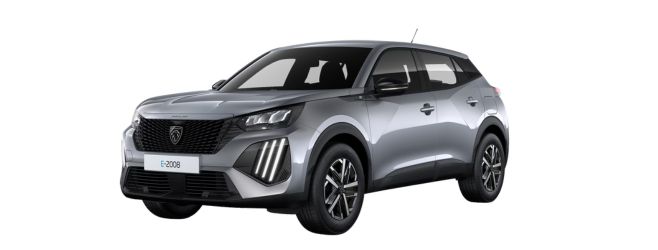
Peugeot e-2008
Real-world range calculator with WLTP data
Specifications
Calculate Real-World Range
Real-world range calculator with WLTP data
Estimated range
Results are estimates based on WLTP data and standard correction factors. Real-world range may vary based on many factors.
How the Peugeot e-2008 Range Calculator Works
The e-2008 is Peugeot's compact electric SUV, built to be practical first and stylish second - though it manages both. It carries a 54 kWh battery and a 115 kW (156 hp) front motor for a 406 km WLTP rating, the lowest headline figure in the Stellantis compact family because the raised, roomy SUV body pushes more air aside than a low hatchback does. The calculator starts from that 406 km number and adjusts for speed, temperature, load and the urban-versus-motorway split of your driving. With a WLTP consumption of 13.3 kWh/100 km and a usefully quick 8.7-second 0-100 km/h time, the e-2008 trades a little outright efficiency for the higher seating position, larger 434-litre boot and family-friendly versatility that buyers in this class actually want.
Driving the Peugeot e-2008 in Winter
Cold weather hits every EV's range, and the taller, roomier e-2008 has a little more cabin air to heat than its hatchback relatives. Near freezing, plan on roughly 290-320 km against the 406 km WLTP, dropping toward 240-270 km in a genuine -10 °C cold snap with the heater working hard. The flip side of the SUV format is welcome in winter: the raised ride height gives more clearance over slush and snow, the cabin warms quickly, and the heat pump on higher trims keeps the heating energy cost down.
As honest planning guidance: expect roughly 80-85 percent of WLTP in mild weather, about 70-75 percent near freezing, and closer to 60 percent during a hard -10 °C spell with heavy heating. These figures are estimates derived from the 54 kWh battery and 13.3 kWh/100 km rating rather than measured cold-chamber tests, and the SUV body means winter highway driving sits a touch lower than for the flatter hatchbacks on the same platform.
Winter Tips:
- ❄️ Precondition the cabin from the MyPeugeot app while plugged in, so the warm-up draws grid power and protects your driving range
- ❄️ Use the heated seats and steering wheel as your primary warmth and keep cabin air temperature modest
- ❄️ Switch to Eco mode in winter to soften throttle and climate demand without making the car feel slow
- ❄️ Hold the battery above roughly 20 percent in deep cold, where a fuller, warmer pack retains heat and rapid-charges better
- ❄️ Add extra buffer for winter motorway runs, since the SUV's frontal area makes cold-weather highway driving costlier
- ❄️ Fit winter tyres - on a taller, heavier body the traction gain is well worth the small efficiency penalty
Winter Features:
- Heat pump standard on GT and optional elsewhere, cutting the energy cost of heating in sub-zero weather
- Compact, well-insulated cabin that reaches a comfortable temperature within a few minutes
- Heated front seats on most trims, comfortably the cheapest source of warmth in cold weather
- Battery preheating before a rapid charge that helps maintain healthy DC charging speeds in the cold
- Raised ground clearance that adds confidence over packed snow and rutted, icy roads
Peugeot e-2008 Real-World Range vs WLTP
WLTP is generous, so treat 406 km as the optimistic ceiling. In mixed everyday driving the e-2008 realistically returns around 330-365 km, with calm urban running edging higher as regeneration recovers energy in traffic. The SUV shape costs most on the motorway: at a 130 km/h cruise the taller body works harder against the air, and an honest steady-state expectation is nearer 270-300 km - perfectly usable for the journeys this car is bought to do.
From the numbers alone, 54 kWh used at the WLTP rate of 13.3 kWh/100 km gives the rated distance, but real roads run faster and hillier than the test. A reliable planning assumption is about 15-16 kWh/100 km in mixed driving, climbing on the motorway, which is how the 330-365 km mixed estimate is reached. The e-2008's slightly higher consumption versus its hatchback cousins is simply the price of the extra height, space and ground clearance.
Three things shape the e-2008's real-world range: a 54 kWh battery well matched to the car's weight, the aerodynamic drag inherent to a raised SUV body, and regenerative braking that recovers most usefully in town. As always, speed dominates - drag rises with the square of velocity, so easing a motorway cruise from 130 to 115 km/h is the single biggest thing you can do to extend range.
Getting the Most Range from Your e-2008
- Use Eco mode for motorway cruising, where it caps power and trims climate output to save energy at speed
- Engage B mode in city traffic to harvest the most energy from the constant slowing of urban driving
- Hold 110-120 km/h rather than higher speeds - on a tall SUV the range penalty of extra pace is steep
- Precondition the cabin while charging so you set off warm without spending battery energy on heat-up
- Keep tyres at the recommended 2.4 bar, since under-inflation quietly raises rolling resistance
- Plan longer trips in the MyPeugeot app so charging stops slot neatly into your route
Peugeot e-2008 Charging Strategy
- Plugged into a 100 kW DC rapid charger, the 10-80 percent window passes in roughly half an hour - about the length of a coffee stop
- An 11 kW wallbox at home brings the battery from low to full in roughly five and a half hours while you sleep
- On the standard 7.4 kW onboard charger a full replenishment takes about seven and a half hours, easily done overnight
- For most families, one home charge a week is enough for a typical 50-60 km daily routine
- A 20-minute rapid top-up adds roughly 120-130 km, enough to extend a longer journey
- Charge to 80 percent for daily use and save 100 percent for the trips that genuinely need the full 406 km
Related Models
Jeep Avenger Electric
Closest sibling - same 54 kWh platform in a shorter, more rugged compact SUV
Citroën ë-C4
Stellantis relative offering a comfort-focused crossback with marginally more range
Hyundai Kona Electric
Compact SUV rival with a larger battery and longer range for buyers who tour further