
Opel Astra-e
Real-world range calculator with WLTP data
Specifications
Calculate Real-World Range
Real-world range calculator with WLTP data
Estimated range
Results are estimates based on WLTP data and standard correction factors. Real-world range may vary based on many factors.
How the Opel Astra-e Range Calculator Works
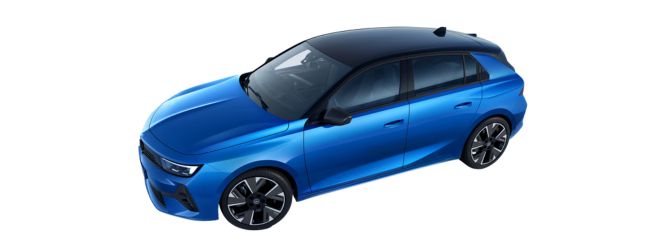
The Astra-e takes one of Germany's best-known compact nameplates and runs it on Stellantis electric hardware: a 54 kWh battery, a 115 kW (156 hp) front motor and a 418 km WLTP rating. The calculator begins with that official figure and then accounts for the variables the lab leaves out - your speed, ambient temperature, the mix of urban and Autobahn miles, and elevation. Where the Astra-e differs from its taller Stellantis cousins is its low, hatchback body, which gives it a cleaner path through the air and a sportier top speed of 170 km/h. Combined with a tidy 12.9 kWh/100 km WLTP consumption and a brisk 9.0-second 0-100 km/h time, it behaves like a conventional Astra that just happens to be electric, rather than an EV with compromises bolted on.
Driving the Opel Astra-e in Winter
Winter trims the range of every electric car, and the Astra-e is no different - though its low body and efficient drivetrain soften the blow compared with bulkier rivals. Near freezing, a realistic figure is around 300-330 km against the 418 km WLTP, sliding toward 250-280 km in a harsh -10 °C cold snap with the heater running. For the kind of 40-60 km daily commute that suits a compact hatch, that leaves plenty of margin, and the available heat pump keeps the heating penalty in check by reclaiming waste warmth rather than burning battery on a resistive element alone.
A practical rule of thumb: expect roughly 80-85 percent of WLTP in mild conditions, about 70-75 percent near freezing, and closer to 60-65 percent in a hard -10 °C spell with heavy heater use. These ranges are honest estimates built from the 54 kWh battery and 12.9 kWh/100 km rating rather than measured cold-chamber data, so treat them as planning guidance that shifts with your speed and cabin settings.
Winter Tips:
- ❄️ Precondition the cabin from the myOpel app while still plugged in so the warm-up runs on grid power, not range
- ❄️ Use the heated seats and heated steering wheel as your first line of warmth before turning up the blower
- ❄️ Select Eco mode in cold weather to moderate climate draw and smooth the throttle response
- ❄️ Keep the battery above roughly 20 percent in deep cold, where a fuller, warmer pack both holds heat and rapid-charges faster
- ❄️ Build a little extra buffer into winter Autobahn legs, since cold air and high speed each cost range and combine badly
- ❄️ Switch to winter tyres - the traction gain on the low-slung Astra outweighs the modest efficiency cost
Winter Features:
- Heat pump available on higher trims, cutting the energy cost of cabin heating in sub-zero weather
- Compact, well-sealed cabin that reaches a comfortable temperature within a few minutes
- Heated front seats on most versions, the most efficient route to staying warm
- Battery thermal management that holds the pack in its ideal window for steady cold-weather charging
- Stable, low centre of gravity that aids composure on slippery winter roads
Opel Astra-e Real-World Range vs WLTP
WLTP flatters every EV a little, so read the 418 km label as an optimistic ceiling. In normal mixed driving the Astra-e realistically covers around 340-375 km, with gentle town running pushing higher as regeneration recovers energy at every stop. The Astra's advantage shows on the motorway: its lower, cleaner body keeps highway consumption more contained than its SUV-shaped relatives, so a 130 km/h cruise still returns an honest 290-320 km rather than collapsing the way a taller car would.
From first principles, 54 kWh used at the WLTP rate of 12.9 kWh/100 km yields the rated distance, but real roads are faster than the test cycle. A dependable planning assumption is about 14-15 kWh/100 km in mixed use, rising on the Autobahn, which is how the 340-375 km mixed estimate is reached. The Astra rewards a steady right foot more than most because its slipperier shape means the gap between gentle and hard driving is a little narrower.
The Astra-e's real-world range rests on three pillars: an efficient 54 kWh Stellantis pack, the genuinely good aerodynamics of a low hatchback body, and effective regenerative braking that shines in town. Speed dominates everything else - drag rises with the square of velocity, so the single most effective range lever is easing your motorway cruise by 10-15 km/h.
Getting the Most Range from Your Astra-e
- Default to Eco mode for Autobahn cruising, where its gentler power delivery quietly saves energy at speed
- Engage B mode in stop-start city traffic to recover the most energy from frequent braking
- Hold 110-120 km/h rather than chasing the 170 km/h top speed - the range difference is dramatic
- Precondition the cabin while charging so you leave warm without dipping into the battery
- Keep tyres at the recommended pressure, since soft tyres add rolling resistance and quietly erode range
- Plan longer journeys through the myOpel app so charging stops align neatly with your route
Opel Astra-e Charging Strategy
- A 100 kW DC rapid session moves the battery through 10 to 80 percent in roughly half an hour, ideal for an Autobahn break
- An 11 kW home wallbox tops the pack back up in around five and a half hours, comfortably overnight
- A standard 7.4 kW home supply needs around seven and a half hours, comfortably an overnight charge
- For most commuters, charging once a week at home is enough to cover daily mileage
- A 20-minute rapid top-up adds roughly 120-130 km, perfect for extending a longer trip
- Charge to 80 percent day to day and reserve 100 percent for journeys that genuinely need the full buffer
Related Models
Peugeot e-2008
Stellantis sibling sharing the 54 kWh pack but in a higher-riding compact SUV body
Citroën ë-C4
Closely related crossback that swaps the Astra's sporty edge for ride comfort
Volkswagen ID.3 Pro
Direct German rival built on a dedicated EV platform with rear-wheel drive and a bigger battery option