
Hyundai IONIQ 5 Long Range
Real-world range calculator with WLTP data
Specifications
Calculate Real-World Range
Real-world range calculator with WLTP data
Estimated range
Results are estimates based on WLTP data and standard correction factors. Real-world range may vary based on many factors.
How the Hyundai IONIQ 5 Long Range Range Calculator Works
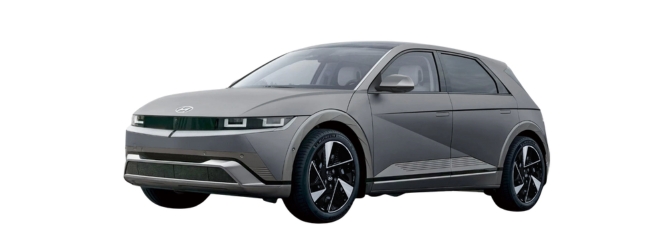
The Hyundai IONIQ 5 Long Range is rated at 507 km WLTP, built on a 77.4 kWh battery and a rated efficiency of 15.3 kWh/100 km. Our calculator takes those real numbers as the starting point, then adjusts for speed, temperature, terrain and climate use - the variables the WLTP lab cycle leaves out. The IONIQ 5 is one of the most distinctive electric crossovers on sale, with a roomy, flat-floored cabin and retro-futuristic styling. Its defining technical feature is the 800V E-GMP platform, which is a genuine product fact: it lets the car charge far faster than most rivals and even act as a power source for external devices. The 168 kW output gives unhurried but adequate performance, with 0-100 km/h in 8.5 seconds, prioritising comfort and range over outright pace. The tall, boxy crossover shape means efficiency is a sensible 15.3 kWh/100 km rather than class-leading: at a steady 130 km/h it draws roughly 19-22 kWh/100 km, good for around 350-400 km, while easing to 110 km/h pushes that back toward 430-460 km as aerodynamic drag falls with speed.
Hyundai IONIQ 5 Winter Range and Cold-Weather Driving
The IONIQ 5 loses range in the cold for the usual two reasons: the battery delivers less energy below about 10°C, and heating the spacious cabin draws real power. From its 507 km WLTP baseline, expect roughly 340-380 km around -5°C to -7°C, dropping toward 290-330 km in harder cold near -15°C. The all-wheel-drive version adds confident winter traction, while the large flat floor and big windows mean cabin heating matters. The 800V platform also helps in winter, because faster charging means less time waiting at a cold, slow charger.
Plan for roughly 340-380 km around -5°C to -7°C and 290-330 km near -15°C, against the 507 km WLTP rating. City driving holds up better than the motorway because lower speeds cut aerodynamic losses and offer more regen. The boxy crossover shape means the cold penalty is felt most at higher speeds, but the 800V fast charging shortens cold-weather stops and the all-wheel-drive traction adds winter confidence.
Winter Tips:
- ❄️ Precondition the cabin and battery from the Hyundai Bluelink app while plugged in, so the energy comes from the grid rather than your range
- ❄️ Lean on the heated seats and heated steering wheel first - direct warmth costs a fraction of what heating cabin air does
- ❄️ Keep motorway speed moderate in winter; the cold penalty stacks on the speed penalty, so 110 km/h saves a lot over 130
- ❄️ Allow extra charging time when the pack is cold - DC speed climbs once the battery warms into its ideal window
- ❄️ Use the all-wheel-drive grip with proper winter or all-season tyres for the best cold-weather security
- ❄️ Use the i-Pedal one-pedal mode to recover energy on cold, stop-start commutes
Winter Features:
- A heat pump on many IONIQ 5 versions reduces the energy needed to heat the cabin versus a resistive-only heater
- Liquid battery thermal management keeps the E-GMP pack in a usable temperature window in the cold
- Heated front seats and heated steering wheel let you cut cabin air heating while staying comfortable
- Battery preconditioning before a fast-charge stop helps the pack accept higher power in cold weather
- Departure scheduling warms the car on a timer so you leave with a comfortable cabin on cold mornings
Hyundai IONIQ 5 Real-World Range vs WLTP
The 507 km WLTP figure comes from a lab cycle; on the road, expect roughly 80-90% in mild weather, which works out to around 405-460 km of mixed driving. Gentle town use can edge higher thanks to regen, while sustained motorway cruising is where the number falls because the tall, boxy body works against it. A confident everyday expectation in spring and autumn is around 410-440 km for mixed use.
Working from the IONIQ 5's rated 15.3 kWh/100 km and 77.4 kWh battery: at a relaxed 100-110 km/h it sits near rated consumption and can approach 470 km; at 130 km/h consumption rises to roughly 19-22 kWh/100 km, which translates to about 350-400 km. These are engineering estimates derived from the published efficiency and battery size rather than a single test, so treat them as planning guidance. The boxy shape costs some motorway range, but the 800V charging makes long trips far less of a chore than the raw range suggests.
The IONIQ 5's range comes down to a few things: a 77.4 kWh pack of useful size, a tall and boxy crossover body that adds aerodynamic drag, and on the AWD version a second motor that adds a little drivetrain loss. Larger wheels add rolling and aerodynamic resistance. As always, speed dominates - drag rises with the square of velocity, so the 110-versus-130 km/h difference is large, and it is amplified by the upright shape. The 800V platform does not extend range, but it transforms how quickly you recover it.
Getting the Most Range From Your Hyundai IONIQ 5
- Cruise at 110-120 km/h on the motorway rather than 130 - it is the single biggest factor in real range for a boxy crossover
- Use the i-Pedal one-pedal mode so braking energy is recovered into the battery instead of lost as heat
- Adjust the regen paddles to suit the road - more regen downhill and in town recovers the most energy
- Precondition the cabin while charging at home so you set off warm without spending battery on heat-up
- Specify or keep the smaller wheels where you can - larger wheels add drag and rolling resistance
- Keep tyres at the recommended pressure; under-inflation quietly eats range on every journey
Hyundai IONIQ 5 Charging Strategy
- On a 220 kW DC charger the 800V architecture enables a 10-80% top-up in roughly 18-20 minutes - a standout road-trip advantage
- 11 kW AC charging fills the pack overnight at home - ideal for starting each day full
- Charge to 80% for daily use and reserve 100% charges for days you genuinely need the full 507 km headroom
- Use route planning so the car preconditions the battery before a DC stop, giving faster, more consistent charging
- Thanks to the 800V platform, even a short 15-minute DC stop adds a large chunk of range for the next leg
- In winter, let the battery warm before fast charging - cold cells charge slower, so plan stops accordingly
Related Models
Kia EV6 Long Range
The IONIQ 5's E-GMP sibling - the EV6 shares the 77.4 kWh battery and 800V charging in a sleeker, sportier crossover body
Hyundai IONIQ 6 Long Range
The aerodynamic sedan on the same 800V platform - far more efficient and longer-range, trading the IONIQ 5's space for slipperiness
Genesis GV60 Performance
A more upscale E-GMP relative with the same 77.4 kWh battery and 800V fast charging, in a sportier luxury crossover